
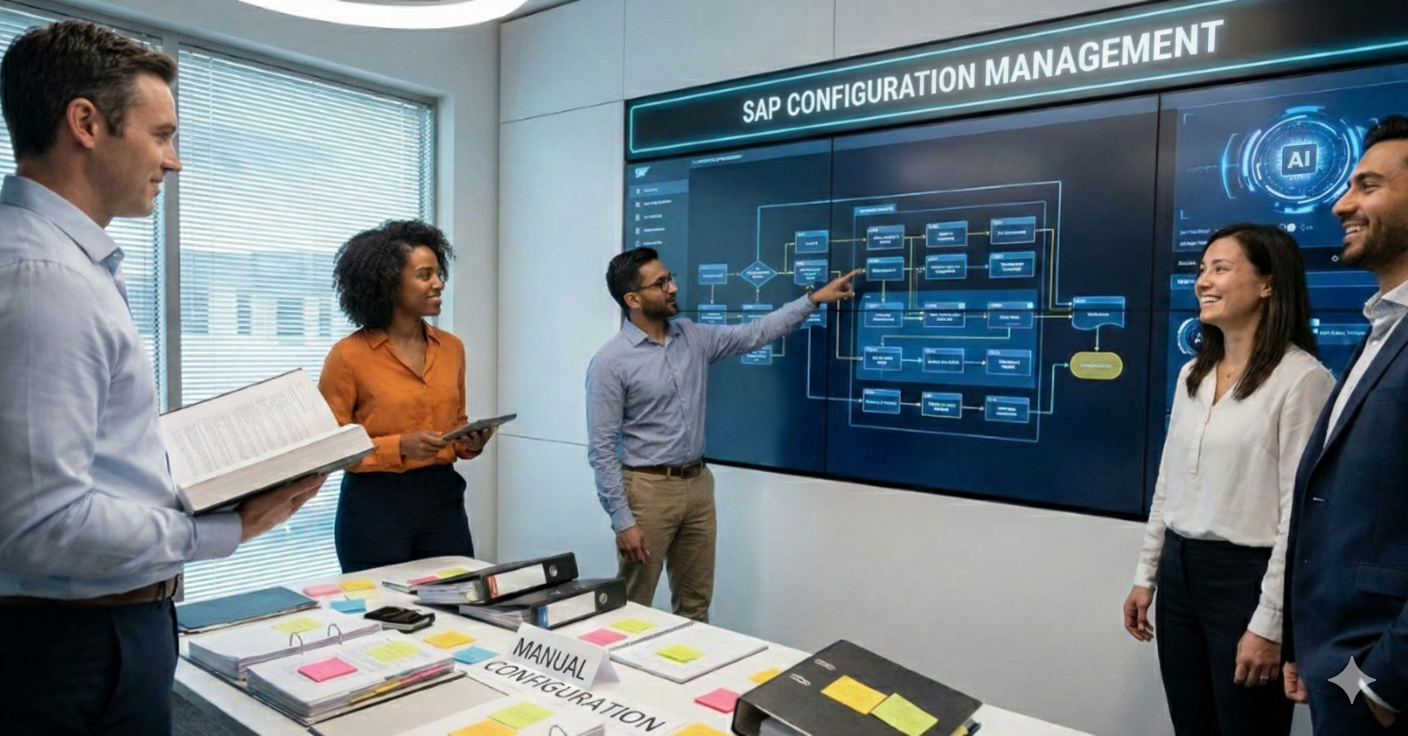
Future of SAP Configuration Management: Manual to Autonomous
Table of Contents:
- Introduction
- Manual Bottleneck within SAP Projects
- Modifying SAP’s Configuration Management
- AI Configuration Management
- Reactive to Proactive Configuration
- Advantages of Autonomous Configuration
- Eerly’s Role in Autonomous Configuration
- Business Effect
- Preparation for Next Generation of SAP Delivery
- Conclusion
Introduction
In a world where digital transformation is driving businesses to speed, SAP Configuration Management is at the forefront of efficiency and innovation. For a long time, SAP projects depended on manual configuration with scattered documentation and teams with no connection. As the enterprise ecosystems become more dynamic, those dated techniques aren’t working.
The next stage of transformation is driven by AI Configuration management in which automation and intelligence are combined to form a self-sustaining autonomous configuration process.
This is the manual Bottleneck within SAP Projects
Each SAP initiative, be it a new S/4HANA deployment, or a SuccessFactors rollout, is faced with an issue that is common to all with the configuration.
The past has been that SAP settings have always been a prone to error process governed by humans:
- Consultants interpret requirements documents and then make modifications manually
- Project managers monitor information using email and spreadsheets that are not connected.
- Audit readiness is dependent on the past documentation and reconciliation with versions.
Manual methods are slow, inconsistent and resource-intensive. The more complicated it is the configuration, the higher chance that the documentation isn’t in line with what’s actually configured.
The companies are at a crossroads. Demand has moved from wanting to automate the process to requiring an automated configuration.
Modifying SAP’s Configuration Management to fit the AI Era
The modern SAP Configuration Management is moving beyond spreadsheets and ticketing software. The focus is shifting towards AI-driven orchestration, where the configuration data, execution and governance are integrated in real-time. The new model is built around four fundamental principles:
The new model is based on four principal concepts:
- Automation by default routine configuration tasks such as creating corporate codes, establishing approvals, or moving data are handled by AI-powered orchestration layers.
- Active Documentation Specifications and configurations are constantly changed. What is implemented in SAP immediately reflects into the documents.
- Audit-Ready on Day One The evidence and the configuration history are automatically recorded, eliminating the need for reconciliation post-project.
- Continuous Governance: Each modification, ticket, or upgrade is managed by intelligent workflows linked to evidence from the system.
Platforms such as Eerly AI Configuration Hub for SAP show this development by merging automation, governance and compliance into one system.
What is the way AI Configuration Management Functions in Real-World Application
AI configuration management shifts SAP distribution from a straight document-heavy process into an intelligent, coordinated flow.
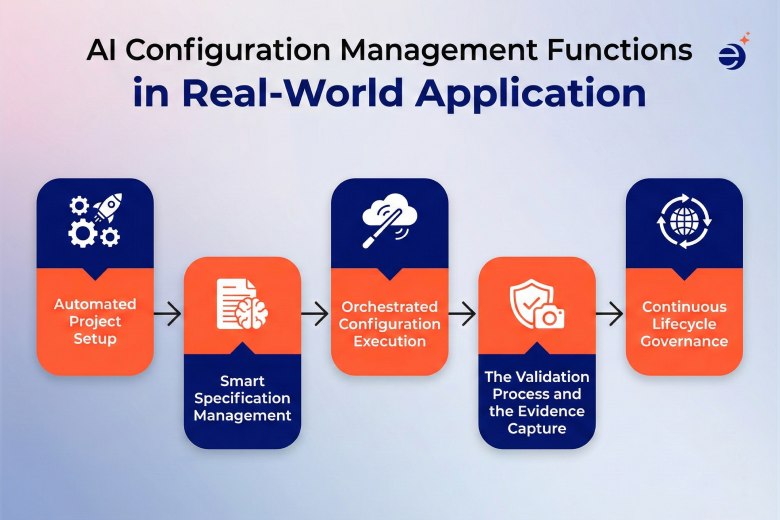
Here’s the way it plays out in the event that AI assumes the leadership role:
Automated Project Setup
AI takes existing project documents (RFPs and SOWs, as well as plans) in order to extract structured project information, saving hours of administrative time. Instead of starting with unfinished templates, team members can start with the pre-filled, standardized data for projects prepared for configuration.
Smart Specification Management
AI algorithms analyze, classify and synthesize business requirements. They generate process flow diagrams and risk summaries that help project managers comprehend the relationships between dependencies without having to read thousands of documents.
Orchestrated Configuration Execution
With AI orchestration in SAP the approved configuration items are implemented directly within the SAP environment, whether it’s S/4HANA SuccessFactors or BTP. AI ensures that every configuration is in line with the documented specifications and provides a single source of truth.
The Validation Process and the Evidence Capture
After configurations have been deployed, AI validates the outcomes and records the build results and records audit evidence in a way that is automatic. It transforms compliance into an after-effect instead of a post-delivery activity.
Continuous Lifecycle Governance
When tickets or change requests are created, the system links them directly to the context of configuration, ensuring transparency throughout the lifecycle of operations such as AMS, audit, and functions.
The shift from Reactive to Proactive Configuration
Traditional SAP teams operate reactively–responding to changes, fixing inconsistencies, and documenting after deployment. When you have an autonomous configuration, your workflow becomes self-sustaining and predictive.
AI detects possible misconfigurations as well as conflicts between dependencies and insufficient approvals prior to build execution. It continuously monitors the health of the system and suggests adjustments, ranging from moving SAP setting away from “manual correcting” into “intelligent mitigation.”
This shift changes the job that SAP professionals play. SAP professionals. Instead of being occupied with tedious configuration tasks, experts and project managers concentrate on aligning strategically, as well as the realization of value.
Advantages of Autonomous Configuration
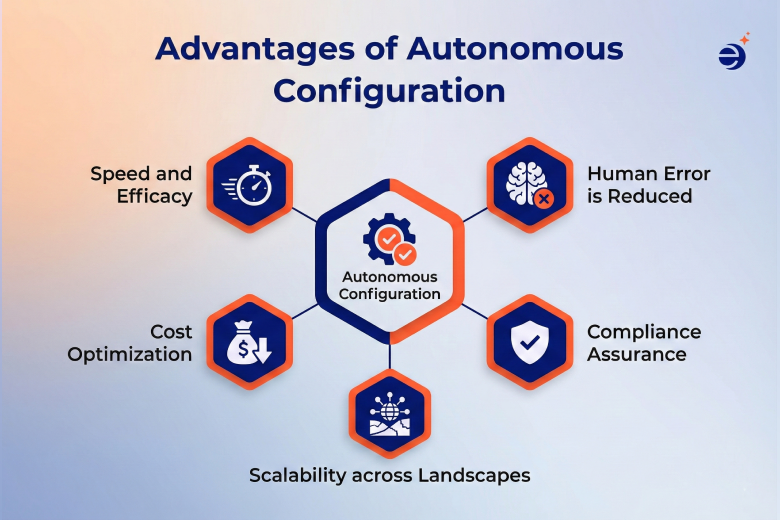
Implementing an autonomous configuration with SAP automated tools aren’t just an technology upgrade. It’s a strategic accelerator.
Speed and Efficacy
AI shortens configuration cycles dramatically. Projects that previously required weeks of configuration can now be launched and verified in just a few days.
Human Error is Reduced
Automating repetitive tasks, the chance of configuration errors and mismatches between versions is reduced.
Cost Optimization
Automation reduces manual tasks and rework costs, while also optimizing consulting hours.
Compliance Assurance
AI-driven evidence tracking makes sure that every change is tied to the source document and validation proof – ensuring the ability to audit at all times.
Scalability across Landscapes
Through unified orchestration, organizations can control configurations across S/4HANA SuccessFactors and BTP through a single, intelligent hub.
Eerly’s Role in Autonomous Configuration Revolution
Eerly AI Configuration Hub with SAP represents the next level of the development of configuration intelligence. Built for enterprise environments with complex requirements It integrates the entire SAP lifecycle, from initiation through audit, into an AI-driven, unified ecosystem.
Key Differentiators:
- Active Configuration Execution: More than just documentation, but Eerly also executes SAP builds on its own, using it’s Build Orchestrator.
- The Living Specifications Documentation remains up-to-date with deployment configurations to ensure constant precision.
- The Compliance By Design approach: Each modification generates audit evidence automatically which is then saved within Evidence Archive. Evidence Archive.
- Cross-Platform Integration: Integrates smoothly across all S/4HANA systems, SuccessFactors, BTP, and ITSM tools such as ServiceNow as well as Jira.
In the end, Eerly doesn’t just accelerate SAP projects, but it also transforms the way they’re managed as well as how they are validated and maintained.
A Business Effect: Measurable Return on Investment in Weeks
Businesses that use AI for configuration management are experiencing tangible results in just a few weeks:
| Metric | Traditional Approach | AI-Orchestrated Method |
|---|---|---|
| Time to Set Up the Project | 3–4 weeks | 1 week |
| Configuration Errors | 8–12% | <2% |
| Audit Preparation | 3–4 weeks | Automated |
| Manual Documentation | 60% of the PM effort | <10% |
| ROI Timeline | 6–9 months | 3–5 weeks |
This isn’t just about operational efficiency—it’s a strategic edge. AI-enabled deployments drive faster go-lives, quicker SAP value realization, and significantly higher business agility.
The preparation for Next Generation of SAP Delivery
As AI capabilities develop, SAP Configuration Management will become more autonomous and self-optimizing. This convergence in AI automation, orchestration and governance will change the way enterprises handle digital transformation.
The future SAP world will be defined by:
- Configuration models for self-learning that can adapt to changing business processes.
- Predictive governance which stops errors from occurring.
- Continuous audit trails are embedded into every deployment.
Organizations who embrace this change in the early stages will set the stage for the next wave of efficiency in the enterprise. Configuration isn’t just a task and is a real intelligent capability.
Concluding: A Way Forward
Future of SAP Configuration Management lies in automation and intelligence as well as orchestration. Manual configuration is giving way autonomous systems that can think and adapt to change, then execute precisely.
With the help of AI tools for configuration management, like Eerly AI Configuration Hub for SAP companies can finally bridge the gap between execution and documentation, resulting in quicker start-up times, better governance, and long-lasting compliance.
In the new age that is based on intelligent transformation in the enterprise configuration isn’t just a chore, but an ongoing process that is that is driven by AI.